For years, people have been asking us if we could offer a course on food forests in English. When we started planning it, we immediately decided that it should be a full week-long course, just like our other international course, since participants might have to travel from far away. We’ve also made this week-long course suitable for couples, who can participate together at a reduced rate.
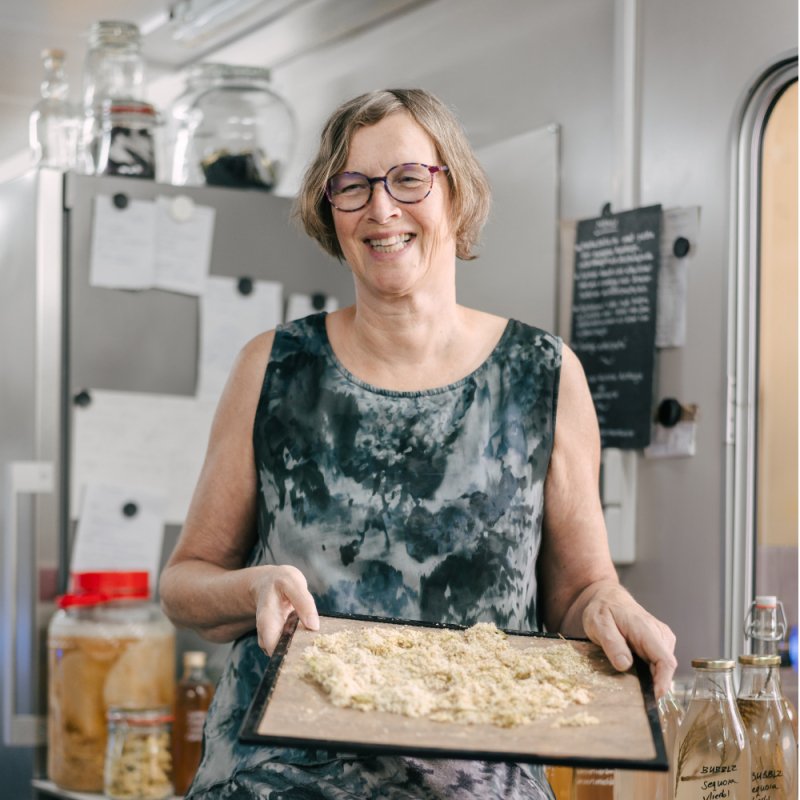
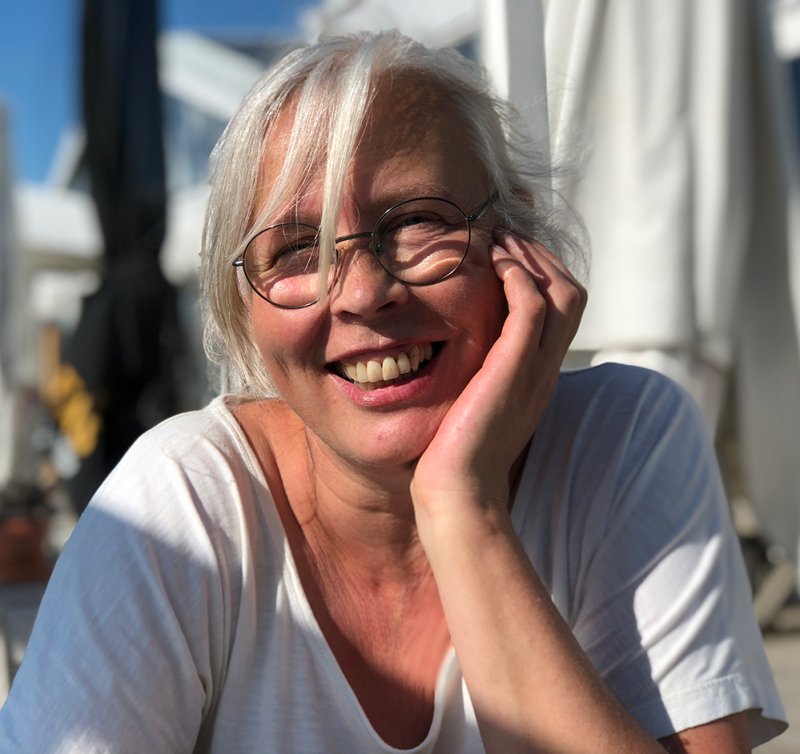
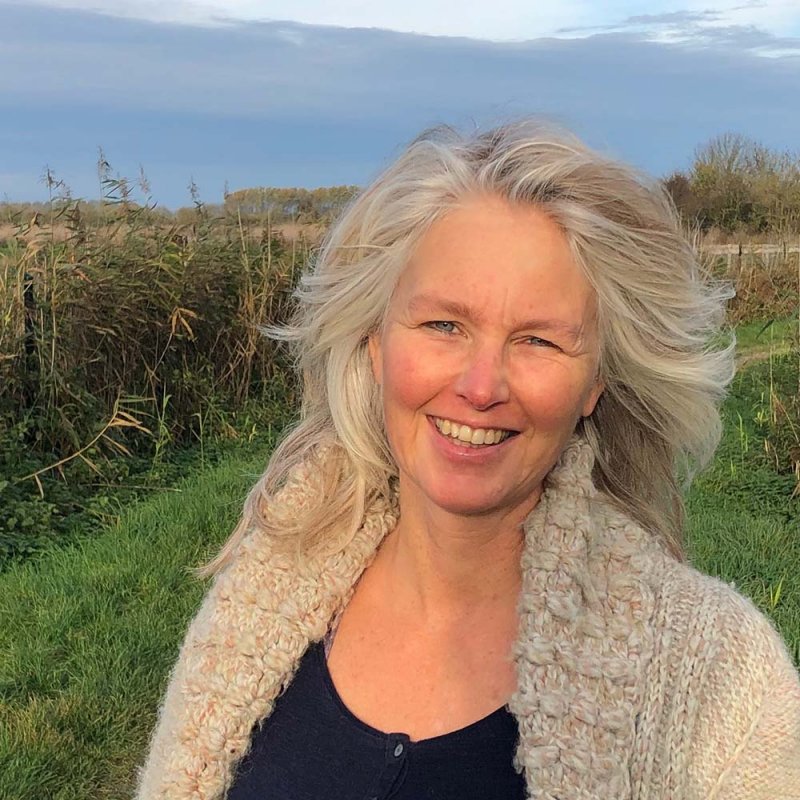
The course will be taught entirely in English by Martijn Aalbrecht, Maarten Schrama, Wouter van Eck, Marly Bonten, and all-around facilitator Anje Poortman. The base camp is the “ Thuishaven ” food forest in the Flevopolder, and during the week you’ll visit three other food forests: the Lydia Waterreus food forest, Lekker Landgoed, and Ketelbroek. Along the way, you’ll learn all the theory about food forests and work on your own plan. On the final Friday, Marly Bonten will teach you how to cook with ingredients from the food forest.
Are you a student? We’re offering two spots for international students at a significantly reduced fee. In exchange, you’ll help out with meals and logistics. See the bottom of the page for details on how to sign up.


For whom is this course intended?
- This course is designed specifically for English speakers interested in the Dutch approach to food forests. Please note that you do not necessarily need to have a food forest site (already) to meaningfully participate in this course.
- International students (continue reading about reduced rates for students at the bottom of the page)
Instructors: Martijn Aalbrecht and Anje Poortman
Date: Monday, July 12,
Location: Thuishaven, Zeewolde
In the morning, Martijn Aalbrecht will explain the basic principles of a food forest: What is a food forest? How does it “work”? What structural elements are essential for a healthy food forest to function? And why? What services does a food forest provide, and why is it important? In the afternoon, Anje Poortman leads an in-depth tour of the two food forests at Thuishaven: a recreational food forest (9 years old) and a productive food forest (5 years old).

Instructor: Maarten Schrama
Date: Tuesday, July 13,
Location: Lekker Landgoed Food Forest, Haarzuilens
In the morning, Maarten Schrama will teach a class on soil formation, the importance of various soil properties for food forestry, and how to ensure your soil reaches the right “condition.” We’ll also explore the role of the soil food web: what does it actually do? How does it develop over the course of succession? What about nitrogen-fixing organisms and mycorrhizae? And: how important are the various food web functions in different climatic contexts? We’ll also address a number of comparative questions, such as: Is the soil in the Netherlands comparable to the soil in the country where you want to establish a food forest? What are the potential differences, and what does that mean for the food forest you have in mind? And: how do you figure out what you need to know in different contexts? In the afternoon, Maarten will lead an extensive guided tour of this large food forest.

Instructor: Martijn Aalbrecht
Date: Wednesday, July 14
Location: Voedselboss in Hengelo
In the morning, Martijn will teach us how to conduct a thorough assessment of the surroundings and how to analyze that data. What are the elements of good design? How do the sun, wind, and the presence or absence of water affect your food forest? How do you work with succession?
In the afternoon, Martijn gives us a tour of two of his food forests: one is over 12 years old and is a typical example of a romantic food forest. The other, which is somewhat younger, is small but very efficiently designed as a production forest. We experience the differences between the two locations within a 10-minute drive. These food forests were planted on poor sandy soil.

Instructor: Wouter van Eck
Date: Thursday, July 15,
Location: Ketelbroek Food Forest
Guided Tour: Ketelbroek Food Forest – Wouter van Eck
In the morning, Wouter will expand your knowledge of the basics of suitable plant species. He will also explain ecological succession, how plants are classified into families, species, and varieties, and what makes plants thrive or struggle. This will give you the basic knowledge you need to select the right plants for a food forest, taking into account taste, productivity, and disease resistance.
After lunch, we’ll visit the famous Ketelbroek Food Forest. This food forest has moved past its early stages, and you’ll see, feel, hear, and even taste what a food forest that’s “only” 18 years old can produce. Wouter will share lessons learned about the interaction between plants, insects, birds, mammals, and fungi during the development of a productive food forest ecosystem.

Instructors: Anje Poortman and Marly Bonten
Date: Friday, July 16
Location: Thuishaven, Zeewolde
In the morning, led by Marieke Karssen, the participants will take a crash course on business plans, followed by time to process all the information and assignments from this week. In a 5-minute presentation, the participants will discuss their food forest plans, which have become more concrete and incorporate the information they’ve gained this week.
In the afternoon Marly Bonten inspires with all her knowledge about what food you can create with all the products a food forest generates. And we cook our own meal consisting of as many products from food forest Thuishaven as possible.

Teachers


Practical information
This five-day course costs €1,000 per person, excluding VAT, and includes breakfast, lunch, and dinner. If you’re coming as a couple, you can participate together for €1,500. It takes place from Monday, July 12, through Friday, July 16. Each course day begins at 10:00 a.m. and ends around 5:00 p.m. We provide breakfast, lunch, and dinner, as well as space and materials for drawing, creating mood boards, and sketching.
We offer the following lodging options.
- Together or alone in your own tent (10.00 euros per night)
- Together or alone in your own RV or trailer (15.00 euros per night)
- If available, a room on the Thuishaven (37.50 euros per night)
- You can also book the course without lodging and provide your own lodging elsewhere.
For the lodging options, we’re assuming a six-night stay, meaning you’ll arrive on Sunday, July 11, and return home or continue your trip on Saturday, July 17. If you’d like to arrive on Saturday or depart on Sunday instead, please let us know in the order notes, and we’ll get in touch with you.
We offer you a digital course environment in which you can (re)find the course materials and many valuable links, as well as watch recordings of the theory part of the course days.
Just to keep enough attention for everyone's situation, we make the group a maximum of 15 people/couples, so don't wait too long to register.
We deliver this course according to our terms of delivery. They are simple and clear, so please read them.
If you cannot pay the course fee in one lump sum, or are with an organization that works with billing, please feel free to contact us.
Two student internship positions at a reduced rate!
Are you an international student in a field related to food forests (ecology, biology, environmental science, etc.) and would you really like to take this course but can’t afford it? Then we have good news: There are two spots available for students at a reduced rate of €200.00, excluding VAT. We do ask that you help out with all the practical arrangements during the course: meals, coffee/tea breaks, and logistics.
Are you interested? Then write an email to info@voedseluithetbos.nl with your motivation, field of study and whatever else seems important to you. We will contact you.