
What is a food forest?
A food forest is an agricultural system designed according to the principles of a natural forest. Trees, shrubs, herbs, vines, and other species grow together in different layers. The system produces food for people while also providing a habitat for biodiversity and soil life.
At the same time, the soil improves on its own, biodiversity increases, and the system grows stronger every year.
It produces food naturally, without chemical fertilizers, pesticides, or intensive tillage.
Smaller food forests, whether in backyards or as community gardens, are officially called edible gardens; larger food forests can sometimes span dozens of hectares.
Check it out: What is a food forest?
In this video, you'll discover what a food forest is and how food production and nature go hand in hand. By combining different types of trees, shrubs, and plants, a diverse ecosystem is created that not only provides food but also contributes to healthy soil and greater biodiversity.

How does a food forest work?
A food forest consists of different layers of trees, shrubs, and plants. By combining species of varying heights and functions, the available space is utilized and a diverse ecosystem is created. Soil life also plays an important role underground.
- Upper canopy – the tallest trees in the food forest.
- Low canopy – smaller trees and fruit trees.
- Tall shrub layer – larger shrubs and berry bushes.
- Low shrub layer – lower shrubs and small fruits.
- Herb layer – perennial herbs and other low-growing edible plants.
- Groundcover – plants that cover the ground.
- Climbing layer – climbing plants that use trees or other structures for support.
- Soil/subsoil – roots, soil organisms, and underground food crops.

Less external input:
No heavy machinery, fossil fuels, chemical fertilizers, or pesticides

Biodiversity:
Attracts birds and pollinators

Delicious food:
A richer variety every year, with more and more nutrients

Climate-resistant:
More and more biomass = increased water-holding capacity and increased CO2 storage.

Social value added:
People enjoy coming together around and through food and nature

Soil structure:
Every year, the soil becomes looser, more fertile, and healthier
How does a food forest develop?
Years 1–4: Design, planting, and development
Take the time to plan carefully, and start with hedges to provide shelter and fast-growing pioneer trees to establish the forest.
Things may seem to be moving slowly above ground, but there’s a lot going on underground.
Ages 4 and up: The system kicks in
Trees are soaring skyward, berries and herbs are beginning to bear fruit, and biodiversity is increasing at every level.
After 5–7 years: The harvest is growing!
Kilograms of crops, healthy soil, carbon sequestration, and an increasingly robust revenue model. It’s time to strengthen your relationships with the community!
What do you eat from a food forest?
By cleverly combining edible species, you can create a designed whole that yields surprisingly bountiful harvests: fruits, nuts, berries, herbs, and edible plants.
You can harvest and cook from a food forest all year round. From wild garlic in the spring to hazelnuts in the fall, there’s always something to harvest.
Food forests offer an enormous variety, allowing you to create the most delicious dishes.
Simon Verboom, co-author of the cookbook*De Voedselbos Keuken*, shares a few discoveries here. Some of the recipes are from the cookbook, while others are individual favorite dishes. Together, they give an idea of the many possibilities offered by the food forest harvest.
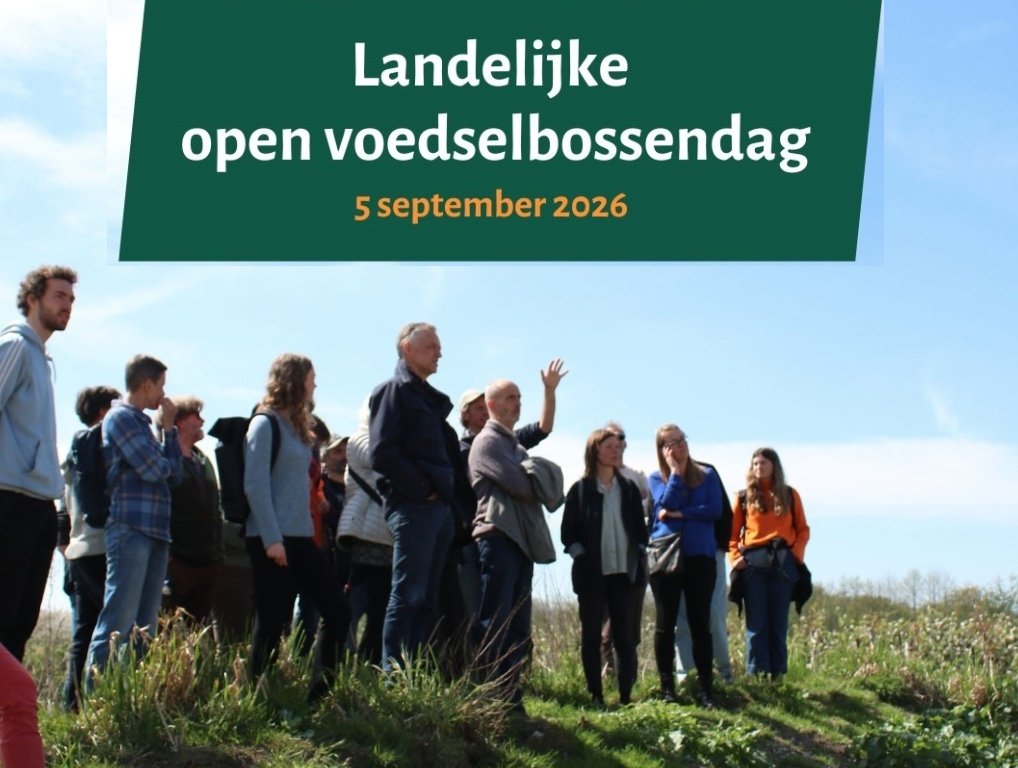
Visit a food forest in your area during Open Food Forest Day on September 5, 2026
More than 100 food forests will open their doors on September 5 during the national Open Food Forest Day.
Food from the Forest , together with the Nature and Environment Federations and Boer&Buur met Natuur, is organizing this open house. Our goal is to show a wide audience what food forests are, what crops you can find there, and how special it is to experience a food forest for yourself.
You can find all participating food forests on the Boer&Buur met natuur website.
Can you start your own food forest?
Short answer: Yes, but scale and purpose make a big difference. You can start with an edible garden in your own backyard, and once you have a larger plot of land and the proper permits, you can start a food forest.
Whether it's a small or large-scale effort, you're doing yourself and the world a favor, and every little bit helps.
Food from the Forest offers several courses, ranging from a basic course on food forests to a modular year-long training program, and, more recently, a course on edible gardens.
Check out our courses—we'd be happy to help you get started.
View courses



Would you like to know more?
Food from the Forest is the place to get started. Since 2017, we've been building a community and knowledge platform for everyone working toward a future where agriculture and nature are seamlessly integrated.

Listen to the Food Forest podcast (in Dutch)
Explore food forests through conversations, stories, inspiration, and practical knowledge.
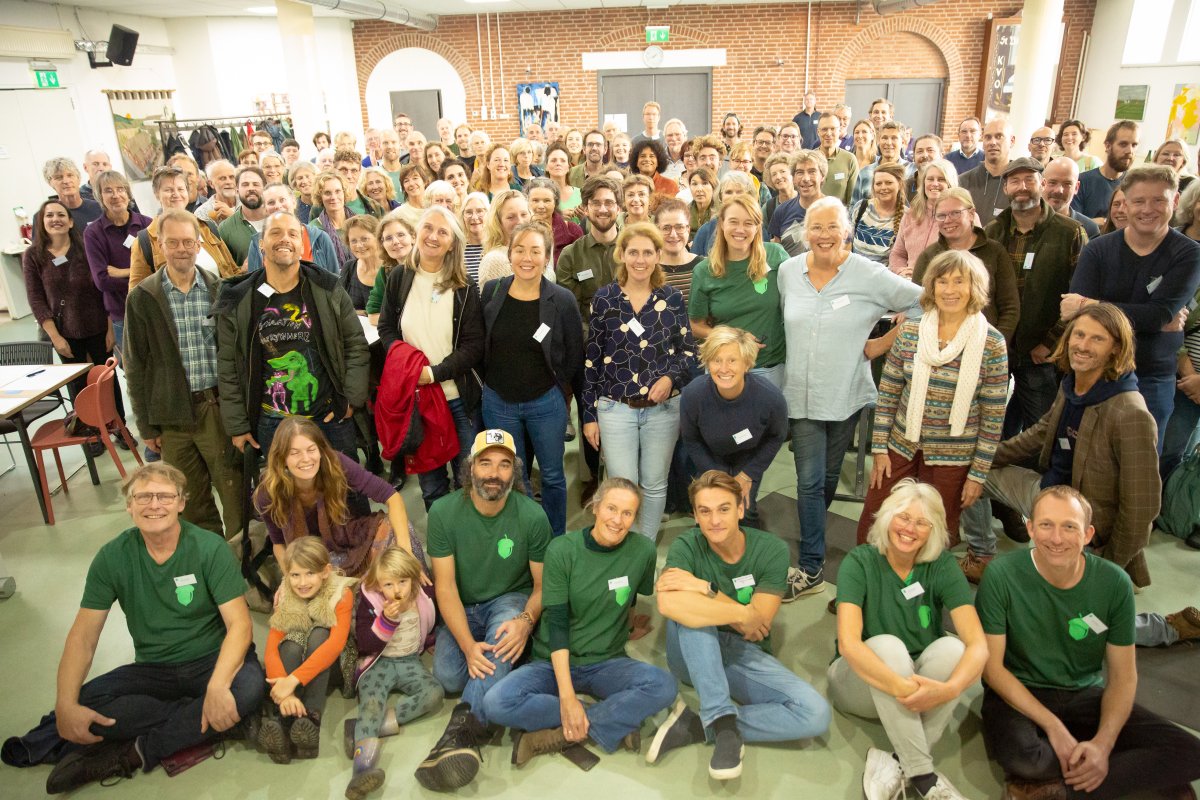
Become part of the movement
Join the association and gain access to resources, activities, discounts on courses, and more.

View the map of food forests
Here you can see all the food forests on our platform. Feel free to take a look and see if there’s one near you.